How To Enjoy The World Cup With a Cup of Coffee & ITIL®
# ITIL
# Service Management
Examine the IT best practice ITIL by using the sport of international football (soccer)
June 10, 2026
Richard Petti
HOW TO ENJOY THE WORLD CUP WITH A CUP OF COFFEE & ITIL®
“I see ITIL everywhere, in everything, all at once.” – R. Petti
Introduction
The objective of this blog is to examine the IT best practice ITIL by using the sport of international football (soccer) as an illustration to increase your understanding of the practice and to help you better enjoy the games of the FIFA 2026 Men’s World Cup.
It does so by describing the business of FIFA and gives an overview of the technologies they use or plan to use in the sport.
It compares FIFA’s approach and business at large to use ITIL to perform IT Service Management and Digital Product Service Management.
A goal is to illustrate the necessity of viewing best practices as being simultaneously prescriptive and non-prescriptive to be of more value to the business by enhancing the customer and user experience. (CX and UX).
Another goal is to illustrate that as a business becomes more dependent on IT solutions, that business and the IT organization need to transform into an increasingly integrated model.
Business Case: What Is The 2026 Men’s World Cup and FIFA
The FIFA 2026 Men’s World Cup begins Thursday, June 11, 2026, when host nation Mexico plays South Africa in Group A. The opening match will take place at the iconic Estadio Azteca in Mexico City.
The tournament concludes with the final on Sunday, July 19, 2026, currently scheduled in New York New Jersey Stadium, renamed to meet one of FIFA’s venue policies.
The 2026 World Cup, for the first time will be hosted simultaneously by three adjacent countries - Canada, Mexico, and the USA.
Those three host countries are three of the 41 associations in the Confederation of North, Central America and Caribbean Association Football (CONCACAF), one of FIFA's six international confederations overseeing football (soccer).
It is the first World Cup with forty-eight qualifying teams. Two-hundred-six Men’s national teams played in a total of 899 matches, in six international confederations to qualify to be one of the forty-eight teams selected this year.
The Fédération Internationale de Football Association (FIFA) manages the month-long Men’s summer tournament in one year, the Club World Cup the year prior to the Men’s, then the Women’s championship the summer after the Men’s. These three tournaments represent three of FIFA’s eleven strategic goals.
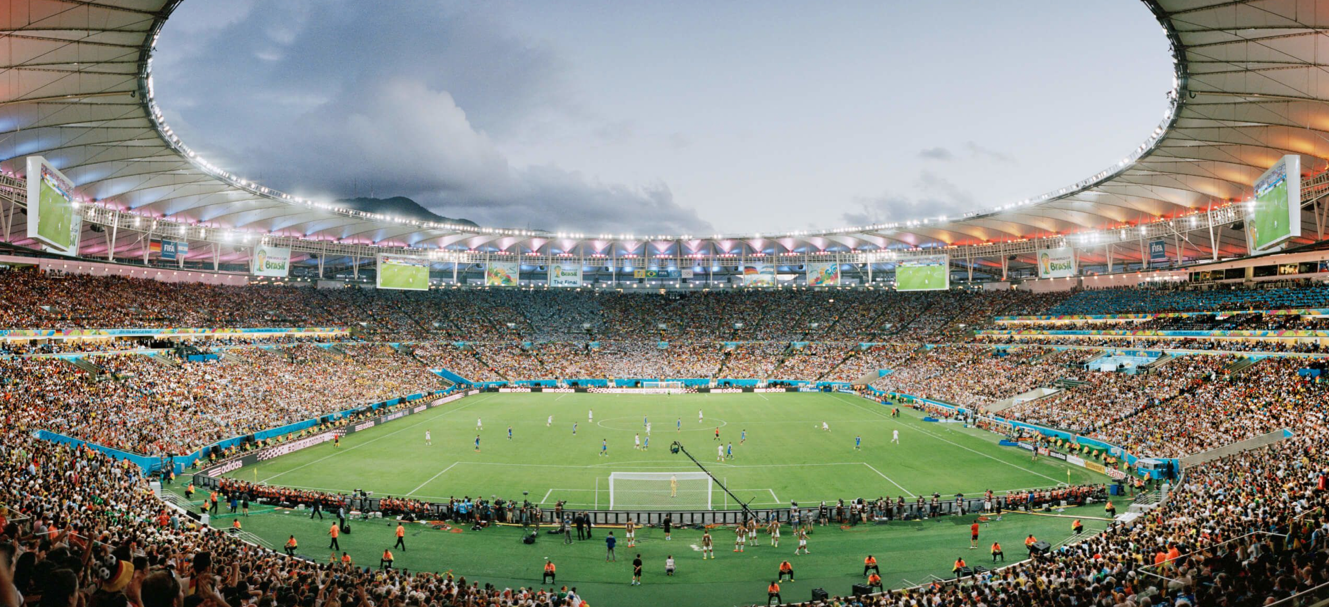
The 2026 World Cup will have a total of 104 matches; played before an estimated 15 million stadium fans, leading up to a projected 5.8 billion fans watching the final match around the world.
FIFA, the Business Behind the World Cup
FIFA, headquartered in Zurich, manages international football worldwide. Since 1904, FIFA, has served as the global governing body for football.
FIFA is a voting member of the International Football Association Board (IFAB), established in 1882, with IFAB accountable for the Laws of the Game.
The FIFA organization structure includes:
- The Congress, the supreme legislative body
- The Council elected by the FIFA Congress
- Judicial bodies {Disciplinary, Appeal, and Ethics Committees}
- The Football Tribunal
- Thirteen business divisions with eleven strategic objectives listed as Goals for 2023-2027.
There are six Confederations of nations that manage football world-wide and send representatives to the annual FIFA Congress meetings.
Relating ITIL and the Business of FIFA
A. PESTLE and the Four Dimensions of ITIL
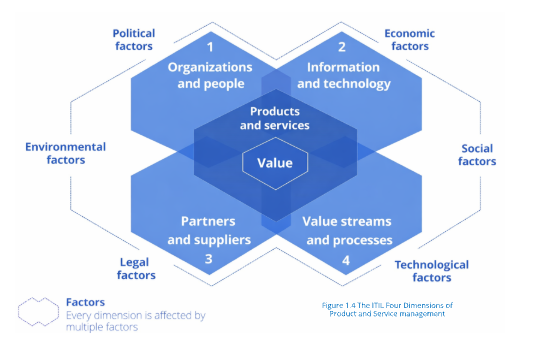
ITIL’s six external factors represented by PESTLE in the diagram below, have an influence on all businesses including FIFA.
All Four Dimensions of ITIL also come into ‘play’ in that organization’s work.
- FIFA depends on an international organization structure, hundreds of external organizations
- They use standard and advanced information and technology
- They engage with thousands of partners & suppliers worldwide, especially so for the venues and fields of the Cup games and the official ball
- They use many value streams & processes to coordinate all their work, manage the other dimensions internally, and manage PESTLE externally.
FIFA’s use of the Information and Technology Dimension
FIFA uses all facets of technology and manages IT in a way like ITIL suggests:
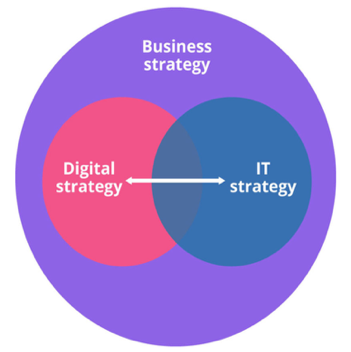
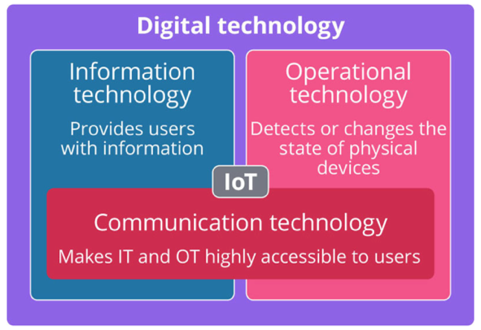
ITIL®4 Digital & IT Strategy Figures 2.6 and 2.1
One of FIFA’s thirteen business divisions is focused on People, Technology & Operations, “to enable and empower the FIFA team by creating efficient structures, providing core services and nurturing a positive working culture that helps us all to achieve our goals.
That division contributes towards Goal 11 [$11B USD in revenue] through principles that include Optimise FIFA’s administrative processes.”
Notably, for IT, one of those goals is:
Goal 3 – “Deliver fan engagement, including through eFootball, and invest in digital technology and Artificial Intelligence for the next generations.”
There are five IT driven objectives under Goal 3:
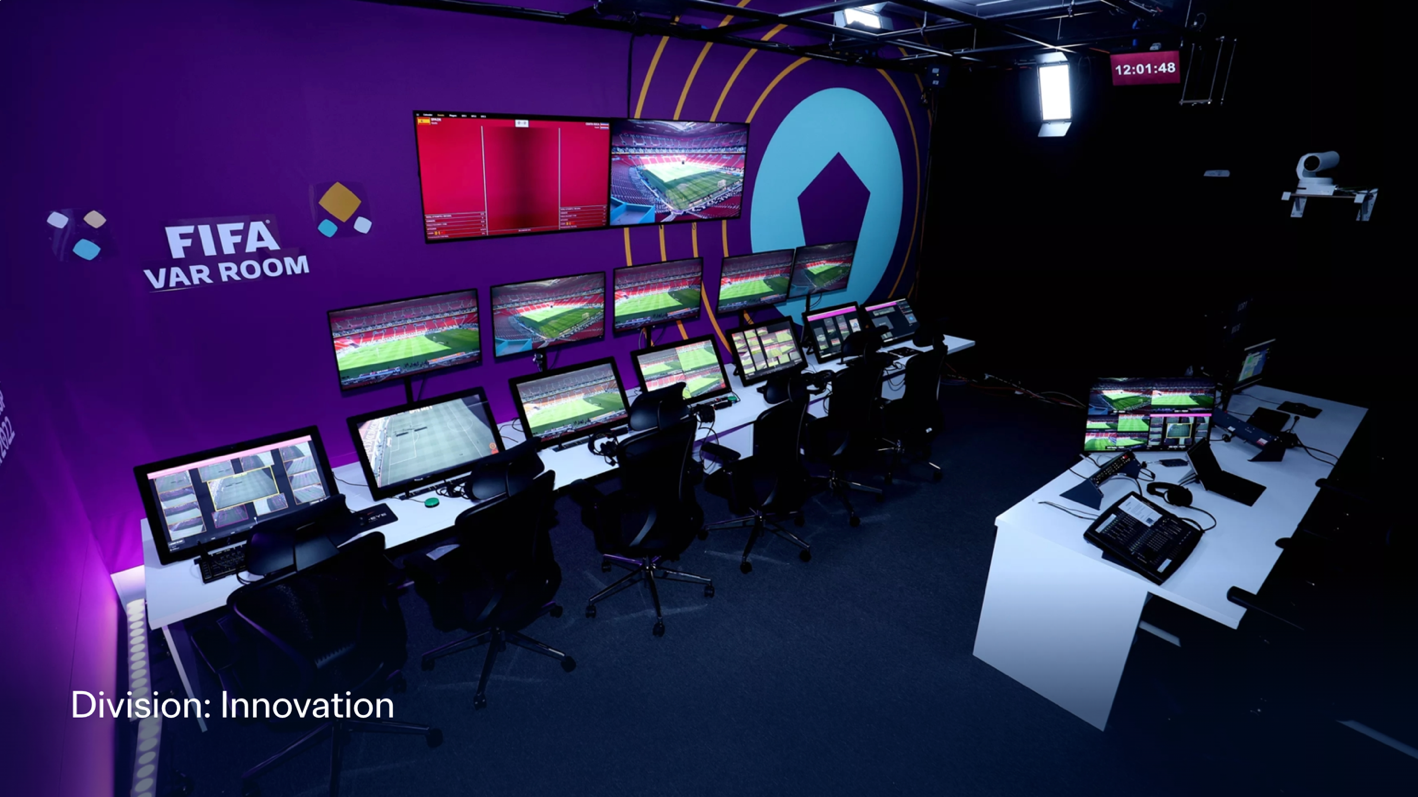
- Evolve and extend Video Assistant Referee (VAR) Systems
- FIFA+: Develop the digital footprint and reach wider audiences
- Engage through eFootball
- Innovate through football data
- Put technology at the service of player welfare
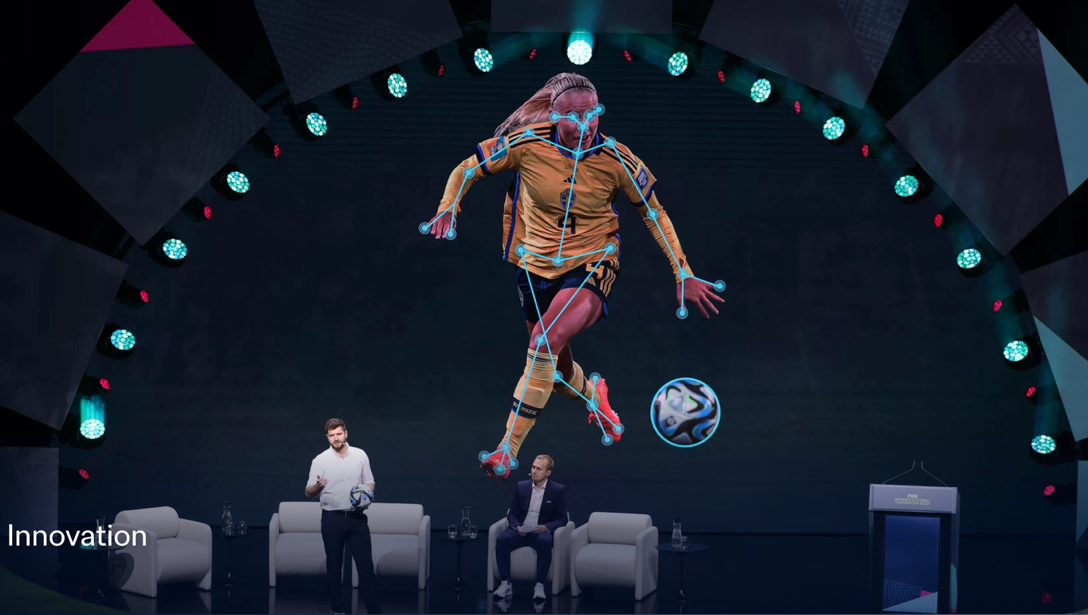
FIFA’s Innovation Division
“Technology provides many new opportunities, and FIFA recognises that it is an integral part of modern society and wants to leverage it as a driver for progress at various levels. The innovation team is responsible for exploring existing and emerging new technologies to benefit the football world.”
The Innovation Programs includes using IT solutions like these:
- Basic Referee Body Cameras
- Esports Data Capture for Broadcast
- AI-based Audio Transcription Tool
- Skeletal Tracking Light (II)
- Goal Line Technology ‘light’
Said another way, in a way like how ITIL works, FIFA uses and wishes to explore and deploy technology to create the best player, fan, and officiating experience.
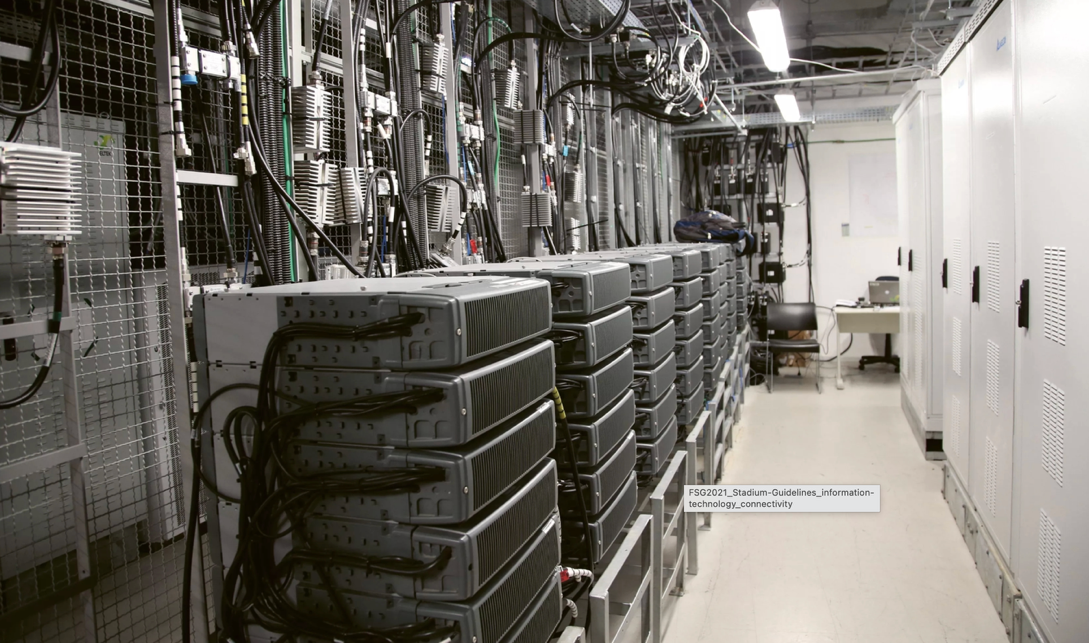
From an IT perspective, operational evidence illustrates FIFA heavily depends on technology and uses IT best practices in the following ways:
- 5.7 Stadium IT Infrastructure: IT (information technology) consists of systems to support the business and operations of the stadium, operational technology to support the functions of the building, and spectator information systems such as video screens and audio systems. https://inside.fifa.com/innovation/stadium-guidelines/technical-guidelines/stadiums-guidelines/information-technology
- Event Technology Complexity: The integration of advanced technology—such as AI-powered cameras, VAR systems, and 3D player scanning for the 2026 World Cup —necessitates strict incident management, service continuity, and change management processes.
- Event Technology Complexity: The integration of advanced technology—such as AI-powered cameras, VAR systems, and 3D player scanning. https://worldsoccertalk.com/news/2026-world-cup-fifa-unveils-ai-technology-to-enhance-var-decisions/
- Goal Line Technology: GLT systems may be used to verify whether a goal has been scored to support the referee’s decision. GLT applies solely to the goal line and is only used to determine whether a goal has been scored. https://www.theifab.com/laws/latest/the-field-of-play/#goals
- Electronic performance and tracking systems (EPTS): When used in matches must ensure that the technology attached to the players' equipment is not dangerous and the information and data transmitted from EPTS to the technical area are reliable and accurate. https://www.theifab.com/laws/latest/the-players-equipment/#other-equipment
- Football Video Support (FVS): An accessible and cost-effective video replay system for key refereeing calls, is rapidly gaining traction across the world game. https://inside.fifa.com/innovation/news/football-video-support-moving-forwards-and-gaining-global-momentum
Β. ITIL’s Value System And FIFA
ITIL’s value system is found woven throughout FIFA’s and Information Technology Service Management (ITSM) and Digital Product Service Management (DPSM) approaches.
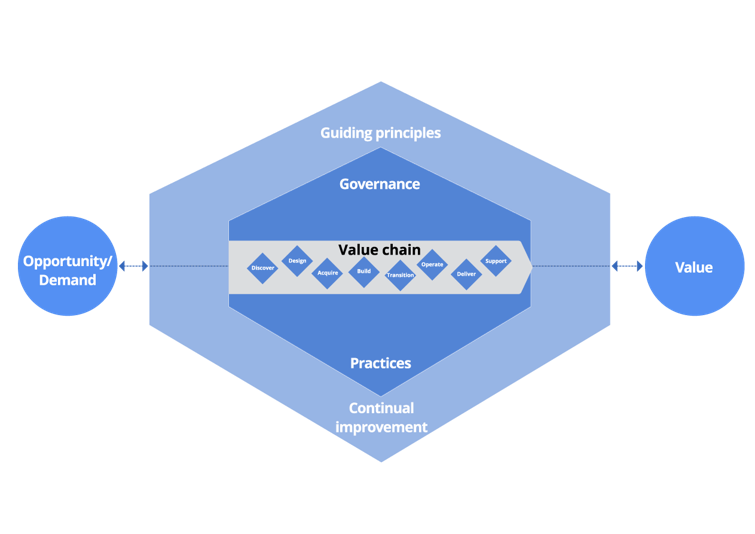
Figure 1.7 The ITIL® Value System
The ITIL Value system has five components, some of which are commonly found in most value systems.
1. Guiding Principles
As true for any business and IT functions within them, there are a philosophy, culture, and spirit of the game present in all facets of football (soccer).
The 2025/26 laws start with this statement:
“Football must have Laws which keep the game fair – this is a crucial foundation of the ‘beautiful game’ and a vital feature of the ‘spirit’ of the game. The best matches are those where the referee is rarely needed because the players play with respect for each other, the match officials and the Laws.
Football’s Laws are relatively simple compared to most other team sports, but as many situations are subjective and match officials are human, some decisions will inevitably be wrong or cause debate and discussion. For some people, this discussion is part of the game’s enjoyment and attraction but, whether decisions are right or wrong, the ‘spirit’ of the game requires that referees’ decisions must always be respected. All those in authority, especially coaches and team captains, have a clear responsibility to the game to respect the match officials and their decisions.
The Laws cannot deal with every possible situation, so where there is no direct provision in the Laws, The IFAB expects the referee to make a decision within the ‘spirit’ of the game and the Laws – this often involves asking the question, ‘what would football want/expect?’.” [Pg.11]
Respect and fairness are core values. [Pg. 14]
2. Governance
Governing and managing the game of international football (soccer) is like it is in any other business, especially where their IT organizations use ITIL. For instance, the governing bodies of football (soccer) engage stakeholders, evaluate, direct, and monitor the Laws, associations, confederations, tournaments, leagues, officials, players, spectators, vendors, venues, and matches.
IFAB and the FIFA Congress, Council, Judicial bodies, and Football Tribunal govern the game internationally.
3. The Value Chain & Value Streams
ITIL has thirty-nine practices as a baseline. All practices have an operational element to them, though half of those may be considered as fully operational on a day-to-day, hour-by hour, minute-by-minute basis.
ITIL is simultaneously prescriptive (for new users) and non-prescriptive (for more mature users). That is also true regarding the Laws of the Game.
Above we see a few of FIFA’s business strategies, tactics, goals, and objectives. All the fifteen Laws of the Game have an operational element to them, game-by-game.
There are value streams to select host cities, select qualifiers, schedule Cup games, to select and then set up venues, pre/post-game inspections and ceremonies, et al.
For those new to the game, be it associations, confederations, national bodies, local organizations, leagues, clubs, coaches, players, referees, sponsors, suppliers, and spectators; the Laws are a prescriptive must-read. For those familiar with the game, they follow the laws during a match where that guidance is applied real-time.
4. Practices
In 1863 there were thirteen, today there are seventeen Laws of the Game of football for 2025/26. https://www.theifab.com/laws/latest/about-the-laws/
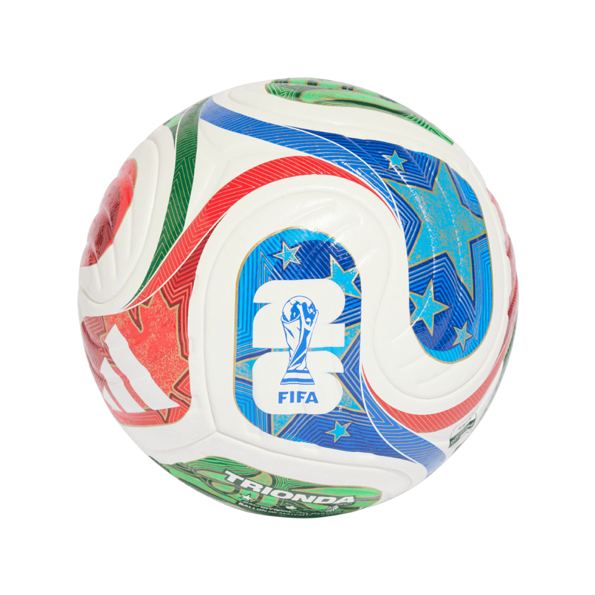
- The Field of Play
- The Ball
- The Players
- The Players’ Equipment
- The Referee
- The Other Match Officials
- The Duration of the Match
- The Start and Restart of Play
- The Ball in and out of Play
- Determining the Outcome of a Match
- Offside
- Fouls and Misconduct
- Free Kicks
- The Penalty Kick
- The Throw-in
- The Goal Kick
- The Corner Kick
In ITIL, we collaboratively manage Practices on a day-to-day basis through the roles of Practice, Product, and Service Managers, assisted by Product Owners, Service Owners, Practice Owners, Coordinators, and Subject Matter Experts. All operational roles are supported by IT solutions, such as the Service Desk, ITSM suites, and monitoring and event management tools.
Per Laws 5 and 6, all the above Laws of football are managed real-time on a game-to-game basis by an on-field team of three referees, supported by four referee assistants on the side of the field and two VAR referees off the field. All nine are supported by IT solutions such as VAR, GLT, and headset/handheld voice communications tools. In the spirit of the game, all decisions are made by the on-field, center referee that runs the diagonal on the pitch.
5. Continual Improvement
FIFA is always using Continual Improvement on all facets of football using feedback, surveys, suggestions, game reports from coaches and referees, measures, monitoring, tests, training, trials, pilots, and change management.
Just this year in April, in Canada, trials started using the ‘daylight offside” rule, regarding the Offside law, as said here:
“The trial, led by FIFA and approved by the IFAB, will test the so-called “daylight” principle, a shift designed to favour attacking play.”
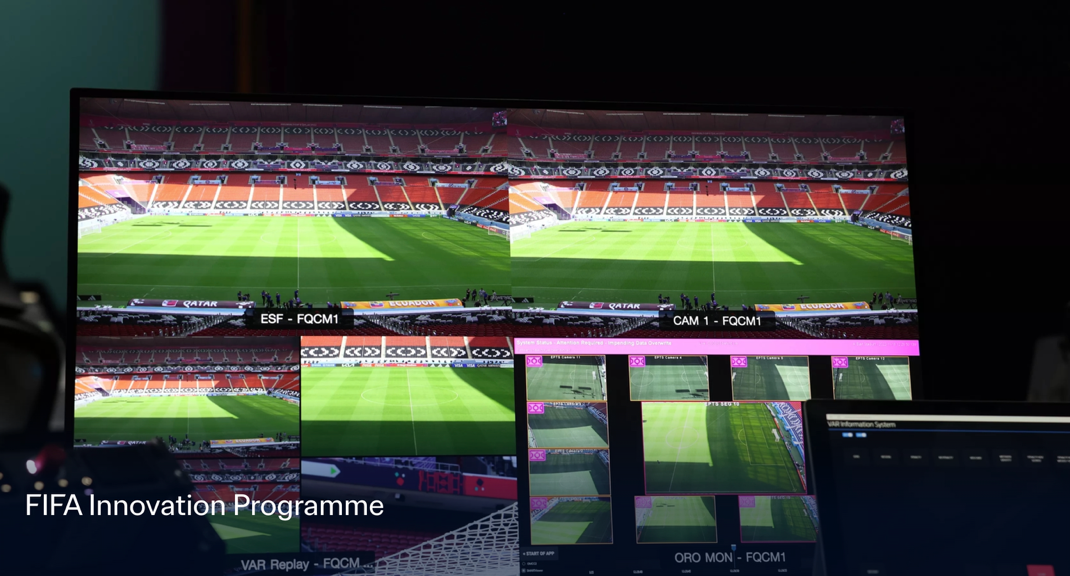
Another improvement initiative underway is the Football Video Support (FVS) , the accessible and cost-effective video replay system for key referee calls.
These trials are great examples of how we could approach improvements in ITSM/DPSM using ITIL.
In turn, to support improvements, there is a section in the beginning of the Laws about change management and another on Quality management. Check out these ‘policies:
- “For every proposed change, the focus is on fairness, integrity, respect, safety, the enjoyment of participants and spectators and, where appropriate, using technology to enhance the game.
The IFAB will continue to work with its advisory panels and engage in extensive consultations with stakeholders so that changes to the Laws benefit football at all levels and in every corner of the world. This should help ensure that the integrity of the game, the Laws themselves and the match officials are respected, valued and protected.
… any changes to the Laws must benefit the game, which often requires testing or trialling the proposed modifications first.
The IFAB greatly values its engagement with people worldwide and is always happy to receive suggestions or questions relating to the Laws of the Game. ‘
- Quality Management:
“The FIFA Quality Programme sets criteria, based on well-founded research, for products, playing surfaces and technologies used in the game of football. In addition to mandatory quality requirements in some fields of application, uniform recommendations are offered in other areas, on the basis of which competition organisers can further specify their own regulations.
C. Illustrations of prescriptiveness and non-prescriptiveness when using best practices
Every best-practice and standard has prescriptive and non-prescriptive characteristics. With ITIL, we measure the levels of maturity of the Value System and the capability levels of the Practices, a component in that system. The Lean philosophy, to work towards perfection applies on all best practices, standards, and quality programs, so, we are always a work in progress. We never really are “done”. No two companies use of ITIL will ever be the same, nor may be judged right or wrong.
FIFA prescriptively creates the guidance for the environments that the matches will be played in. During games, the monitoring of conformance, compliance, and performance within the Laws is performed collaboratively by the players and the referees. Technology is used real time to assist the officiating.
Each venue, team, players, referees, spectators, and environmental conditions are variables and cannot be managed the same as any other game or run only prescriptively. In the end, from the start, each restart, on through the final whistle, though not 100% accurate; the referee’s decisions stand and where non-prescriptiveness begins.
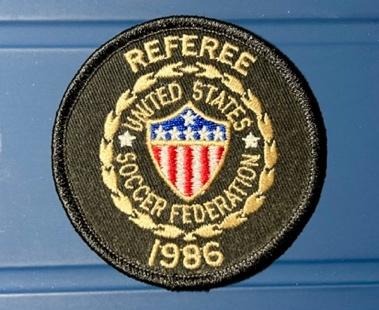
“Reference is made in Law 5 to referees operating within the framework of the Laws of the Game and the ‘spirit of the game.
Referees should apply the Laws within the ‘spirit’ of the game to help produce fair and safe matches [Pg. 17]
Referees are expected to use common sense and to apply the ‘spirit of the game’ when applying the Laws of the Game”
- Laws of the Game, Practical Guidelines for Match Officials [Page 187]
Here are a few FIFA-based illustrations of the duality of best practices:
- During a match is wher e the most variables are present that create the dynamics that make the most non-prescriptive aspects kick in. Players and referees are assessing, reacting, and making decisions, within at most, seconds while at the same time maintain the flow of the game to ensure both teams have most of the allotted time to play.
- Variance from the prescriptive elements of the game, such as Law 1, The Field of Play are allowed. For example, though the book gives us the dimensions of the field for professional matches, regional as well venue variances are allowed, such as a smaller field for kindergarten games.
- Though by the book a match is 90 minutes, there are variances allowed for youth, veterans, disability and grassroots football. E.G. For non-competitive, recreational youth soccer based on age groups, games may be 40 to 90 minutes.
- Professional level matches run continuously for 45 minutes in each half, a total of 90 minutes, with no time-outs nor challenges by players or coaches. However, there is “stoppage time” tracked during the match then added after the full 90 minutes to address interruptions during each half for injury or other major disruptions when play needs to be temporarily stopped, though the game clock always keeps running. The official clock for time keeping is the referees’ watch, not the scoreboard.
Why This Matters for IT Professionals
For all situations, understanding non-prescriptiveness when using ITIL, or in fact any IT or non-IT best practice or standard for ITSM/DPSM is essential.
Sometimes IT practitioners, whose success using computers depends on binary thinking, struggle with the freedom of thinking holistically, outside the boxes of the practice.
As true with ITIL, in football (soccer), applying the Laws will needs to be consistent with the fairness, safety, and “spirit” of the sport.
ITIL is a non-prescriptive, vendor neutral, technology agnostic guidance but if you are new to using it, there is inside it, prescriptive guidance to help you get started.
Yet, using only ITIL, is not recommended, because any organization will need a portfolio of practices and standards to be effective.

Summary
Football (soccer) – measured by numbers of countries, clubs, games played, players, plus fans – is the largest sport played and watched in the world.
What all the football organizations have in common is their use of guidance from one book of 217 pages, the Laws of the Game.
Information technology is used in every country in the world requires the use of many different practices and standards to perform ITSM/DPSM.
Increasingly, all professional sports organizations depend on IT to facilitate their games, so, the business and IT strategies, products, services, value systems, as well, their culture must be more than just aligned, they need to be integrated.
IT solutions in all sports have gone way beyond instant replay, it assists with close calls made in less than a second by a game official, and in some cases, it has become one of the virtual officials on the court or field making calls, assisting the referee, not deciding for the refs. The human dynamic remains part of the game.
Like it is with any international sport played worldwide, when using best practices in any best practice, standard, or quality program for IT, we need to use their prescriptiveness and have flexibility for non-prescriptive situations to make the highest possible real-time play and quality calls in the game, that improves the CX and UX which in turn co-creates value for all stakeholders.
Hopefully, this blog helps you better understand ITIL and enjoy the games of the 2026 World Cup!
Sign in or Join the community
Where conversation, connection, and real-world practices come together.

Create an account
Where conversation, connection, and real-world practices come together.
10
Comment (1)
Popular

Dive in
Related
Blog
The New ITIL Version 5: What It Means in the Real World of Digital Services
By Scott Everett • Feb 5th, 2026 • Views 155
Blog
The Dark Side of ITIL: How to Survive as a Human Being
By Andri Holmgeirsson • Jun 2nd, 2026 • Views 44
Blog
The Risk of Confusing Compliance with Value Creation in ITIL
By Yurguen Penaranda Th... • Aug 11th, 2026 • Views 35
Blog
The New ITIL Version 5: What It Means in the Real World of Digital Services
By Scott Everett • Feb 5th, 2026 • Views 155
Blog
The Dark Side of ITIL: How to Survive as a Human Being
By Andri Holmgeirsson • Jun 2nd, 2026 • Views 44
Blog
The Risk of Confusing Compliance with Value Creation in ITIL
By Yurguen Penaranda Th... • Aug 11th, 2026 • Views 35